LiDAR for AGV and
AMR Applications
As industries move toward automation, LiDAR for AGVs and AMRs has become essential for safe, intelligent navigation. By using laser-based sensing instead of cameras alone, AGV LiDAR and AMR LiDAR systems provide precise, real-time 3D perception of the environment. This enables autonomous mobile robots (AMRs), automated guided vehicles (AGVs), and other robotic platforms to detect obstacles, avoid collisions, map surroundings, and operate efficiently in dynamic environments.
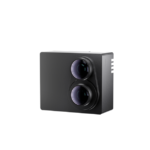
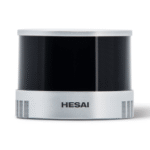
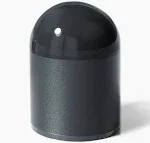
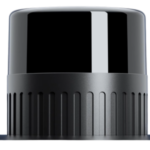
Popular LiDAR Products for AMRs and AGVs



Common AMRs and AGVs
That Leverage LiDAR
LiDAR technology has been integrated across a wide range of mobile robotics platforms:
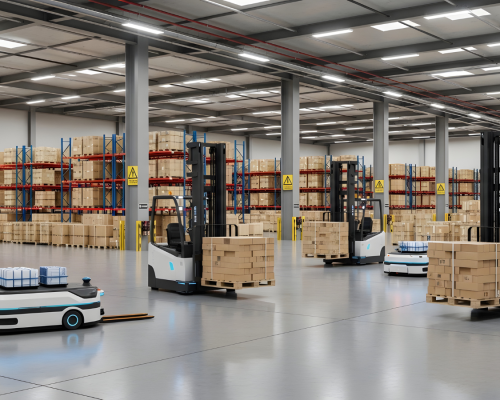
Material-Handling AGVs – Used in warehouses and factories for pallet transport, towing, and inventory movement.
Autonomous Mobile Robots (AMRs) – Flexible indoor robots that navigate dynamically without fixed paths.
Forklift and Tugger AGVs – Automated vehicles for heavy load transport and storage operations.
Cleaning and Sanitation Robots – AMRs equipped with LiDAR to navigate efficiently in public spaces or industrial facilities.
Autonomous Mowing Robots – Outdoor AGVs that rely on LiDAR to maintain consistent coverage and obstacle detection.
Security and Inspection Robots – Patrol routes, monitor facilities, and detect anomalies using LiDAR’s accurate depth perception.
Why Choose LiDAR over Cameras for Robotic Applications?
Unlike camera-based vision systems, LiDAR for robots operates independently of ambient light and generates true 3D spatial data. This allows AMRs and AGVs to perceive surroundings in all lighting conditions, identify objects by shape and distance, and operate in dusty or reflective industrial environments. The combination of accuracy, speed, and durability makes LiDAR the preferred perception sensor for safety-critical robotics applications.
KEY ADVANTAGES OF LIDAR:
Longer Detection Range: Detects obstacles up to hundreds of meters away, ensuring safe stopping distance.
Wide Field of View: Covers blind spots that cameras or ultrasonic sensors might miss.
High Accuracy & Speed: Real-time 3D point clouds allow precise positioning and motion control.
Reliability in Harsh Environments: Performs in dust, fog, or low-light conditions where cameras fail.
Lowering Cost: Modern LiDAR systems are now comparable in cost to multi-camera arrays while providing more robust data.
Common Use Cases of LiDAR for Robots
Autonomous Navigation
Enables AGVs and AMRs to localize, map, and plan routes in real time without human intervention.
Collision Avoidance & Safety
Detects obstacles and triggers slow-down or stop functions to prevent accidents with people or equipment.
Mapping & SLAM (Simultaneous Localization and Mapping)
Builds precise 2D or 3D maps of facilities or work areas for repeatable navigation.
Volumetric Measurement
Measures stockpile volume, pallet loads, or container fill levels accurately.
Mobile Security & Inspection Robots
Provides perimeter detection and autonomous patrol capability, even in low-light or nighttime conditions.
What Types of LiDAR Sensors
Are Best for AGVs and AMRs?
Selecting the right sensor depends on many application factors, including range, field of view, use case, resolution, safety and environmental considerations.
Mechanical LiDAR
- Provides 360° coverage and high resolution.
- Ideal for mapping, navigation, and localization in large or open spaces.
- Commonly mounted on top of AMRs for full-surround situational awareness.
- In most cases, mechanical LiDAR have higher accuracy and resolution as compared to directional LiDAR.
- Reliability can be an issue for certain sensors in harsh conditions (high vibration, high/low temperature, dusty…)
Solid-State LiDAR
- Compact, durable, and free of moving parts—perfect for rugged industrial use.
- Offers high reliability in environments with vibration, dust, or frequent impact.
- Cost-effective for short- to mid-range detection and front- or side-mounted safety zones.
- Often used in combination with mechanical sensors for hybrid perception systems.
In general, AGV LiDAR solutions combine one or more mechanical and solid-state LiDARs to achieve full coverage, depth perception, and redundancy. Solid-state sensors handle near-field detection and safety zones, while mechanical sensors provide long-range awareness and localization data.
Why LiDAR Is the Future of Sensing for Mobile Robotics
The evolution of AMR LiDAR and AGV LiDAR is redefining industrial automation. As sensors become smaller, more affordable, and more intelligent, LiDAR will continue to power safer, smarter, and more autonomous robotic platforms. Whether navigating a crowded warehouse, patrolling a facility, or mowing a field, LiDAR for robots provides the precision, reliability, and situational awareness needed to achieve full autonomy.