SiLC FMCW LiDAR Solutions
High-Precision FMCW LiDAR for Industrial Automation, Robotics, Defense, and 3D Measurement
As an authorized distributor, US LiDAR partners with SiLC Technologies to deliver advanced Frequency Modulated Continuous Wave (FMCW) LiDAR solutions for applications requiring high precision, high resolution, and ultra-long range measurement, from product inspection and volumetric measurement to robotics and security.
SiLC is a leading FMCW LiDAR manufacturer, producing sensors trusted by leading robotics, automation, transportation, and automotive companies worldwide. Their product portfolio includes Trace line scanners, Edge area scanners, and Vista long-range FMCW LiDAR, offering solutions for virtually every perception challenge.
Buy SILC LiDAR Sensors Online
Depending on your location, sensors can be shipped from our office in California or drop shipped directly from one of SILC’s manufacturing facilities. Reach out to our team for volume pricing.
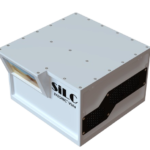
The Eyeonic Vista combines resolution, range, and intelligent target analysis in a compact, ruggedized platform designed for outdoor environments. This ultra-long-range vision system can identify and track small targets at distances beyond 1 kilometer, delivering reliable performance where traditional vision systems struggle or fail. From humans and animals to vehicles, drones, and unauthorized vessels, Eyeonic Vista provides dependable detection and classification in challenging conditions including bright sunlight, dense fog, darkness, and dust-filled environments.
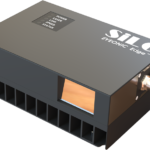
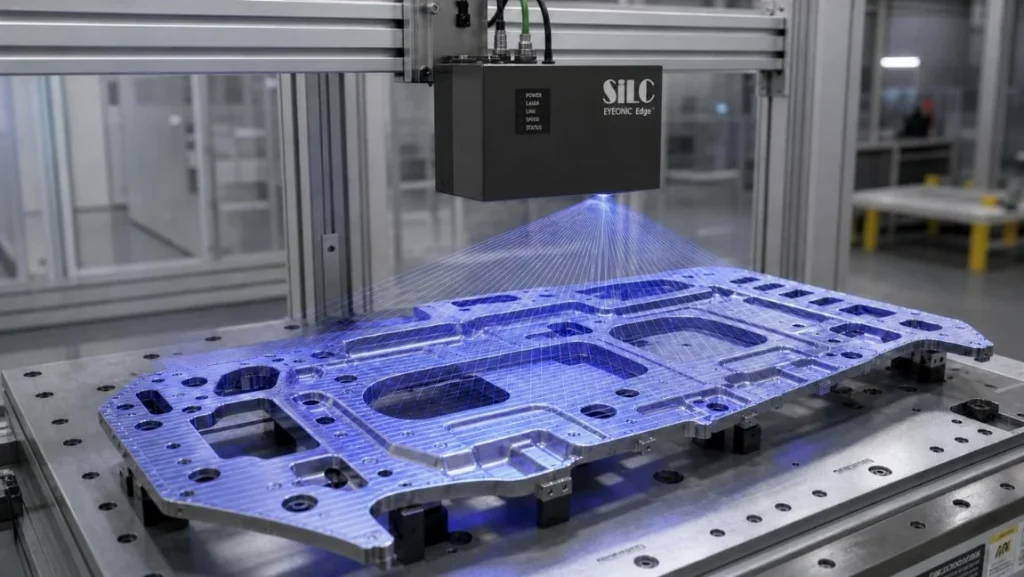
The Eyeonic Edge product brings advanced 4D vision sensing to industrial automation and manufacturing environments, enabling inspection and quality control of large objects. Easily mounted over conveyor belts and robotic arms, Edge has a large 40×40 FOV with real-time region of interest (ROI) and zooming capabilities and can see objects up to 10 m. Eye-safe and unaffected by challenging lighting conditions, from dark and dusty facilities to bright outdoor environments.
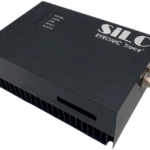
SiLC’s Eyeonic Trace FMCW LiDAR is a compact, high accuracy Laser Line Scanner built for high precision applications. Easily mounted over conveyor belts, robotic arms and assembly lines, Eyeonic Trace can be used for product dimensioning, vehicle classification, quality control, and surface scanning.
Why Choose SiLC FMCW LiDAR?
SiLC manufactures high performance FMCW LiDAR sensors that merge precision, accuracy, and range for a wide variety of applications, including inspection, automation, and security.
Key Advantages
- Sub-millimeter precision for dimensional measurement
- Direct radial velocity sensing enabled by FMCW Doppler measurement
- Strong ambient-light and multi-sensor interference rejection
- Dual-polarization intensity information for additional material and surface analysis
- US-based R&D, manufacturing, and support
SiLC FMCW LiDAR Product Selection
SiLC offers multiple FMCW LiDAR sensors for both short range, high-resolution applications as well as long-range sensing. These sensors use the same FMCW LiDAR technology but are designed uniquely for challenging applications.
- Eyeonic Trace – Line scanner designed for profiling, product inspection, surface scanning, and dimensional measurement. Maximum working range of 10 m, 72° field of view, up to 600 lines/second, and more than 1,300 points/line.
- Eyeonic Trace Ultra – High-precision line scanner for applications prioritizing finer depth precision at shorter distances. Maximum working range of 5 m with the same 72° line-scanning field of view.
- Eyeonic Edge – Area scanner that captures 3D measurements across a software-defined area, suitable for surface inspection and 3D object measurement. Maximum working range of 10 m, field of view up to 40° × 40°, and 1 million points/second.
- Eyeonic Edge Ultra – High-precision area scanner for detailed 3D measurement where precision is the priority. Maximum working range of 5 m, field of view up to 40° × 40°, and 1 million points/second.
- Eyeonic Versa – Mid-range FMCW LiDAR for perimeter monitoring, security, and other site monitoring applications.
- Eyeonic Vista – Long-range FMCW LiDAR for port monitoring, drone monitoring, and other long-distance sensing applications.
Trace and Edge Available In 2 Models
| Specification | Standard | Ultra |
|---|---|---|
| Maximum working range | 10 m | 5 m |
| Depth precision, slow scan | 200 µm | 100 µm |
| Depth precision, fast scan | 600 µm | 300 µm |
| Scanning configurations | Trace line / Edge area | Trace line / Edge area |
| Laser classification | Class 1* | Class 1* |
*Eyeonic Trace and Edge are Class 1 laser products.
Not sure which SiLC FMCW LiDAR sensor is right for your application? Contact US LiDAR for assistance comparing range, precision, scan geometry, and integration requirements.
FMCW LiDAR vs. Time-of-Flight LiDAR
Conventional pulsed Time-of-Flight (ToF) LiDAR measures distance from light travel time. FMCW LiDAR compares a frequency-swept emitted signal with the return signal, enabling range measurement and direct radial velocity measurement through Doppler shift. Coherent detection can also improve rejection of ambient light and interfering optical signals. Actual performance depends on sensor design and conditions.
- ToF: distance is typically derived from pulse travel time; velocity is generally inferred from successive measurements.
- FMCW: distance is derived from beat frequency, and direct radial velocity information is available.
- Interference: FMCW coherent detection offers strong optical interference rejection. Both technologies have strengths, and the right choice depends on your application.
Line Scanners vs. Area Scanners
Choosing between a LiDAR line scanner and an area scanner depends on how objects move and what needs to be measured. Both technologies deliver high-precision 3D measurements, but each is optimized for different applications.
Line Scanners (SiLC Eyeonic Trace) capture measurements along a single line, building a 3D point cloud as the object or sensor moves. They are ideal for conveyor systems, robotic inspection, dimensional measurement, and continuous production processes.
Area Scanners (SiLC Eyeonic Edge) capture 3D measurements across a two-dimensional field of view without requiring relative motion. They are ideal for stationary object inspection, robotic positioning, quality control, and complex surface measurement.
Both SiLC FMCW LiDAR solutions provide precision down to 100 micrometers in their Ultra configurations, enabling accurate industrial measurement and automation applications.
High Resolution Sensors for Every Application
From short range, high accuracy scanning applications to ultra-long range monitoring and detection, SiLC has the proven sensor technology to get you the data you need.
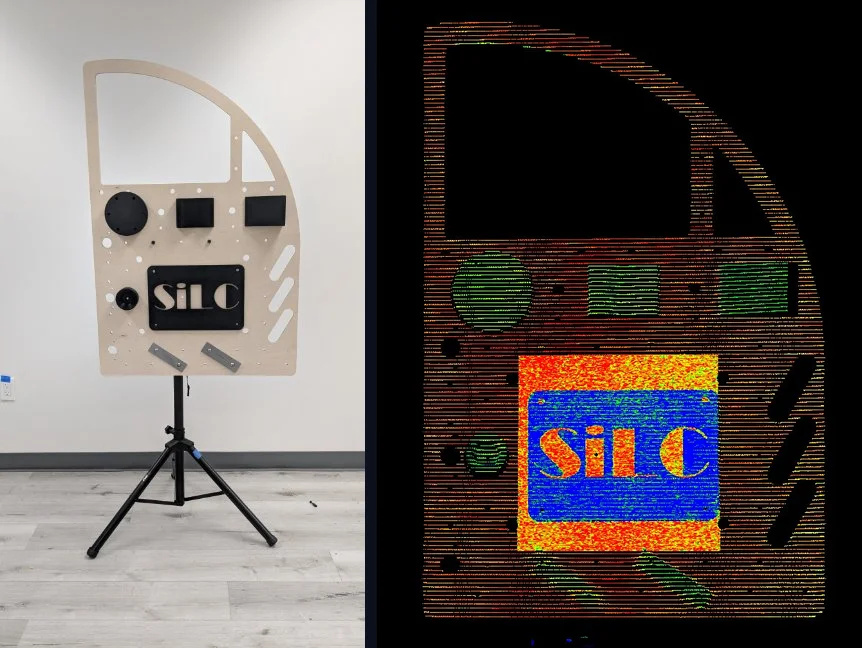
High resolution point cloud demonstrating Region of Interest Feature.
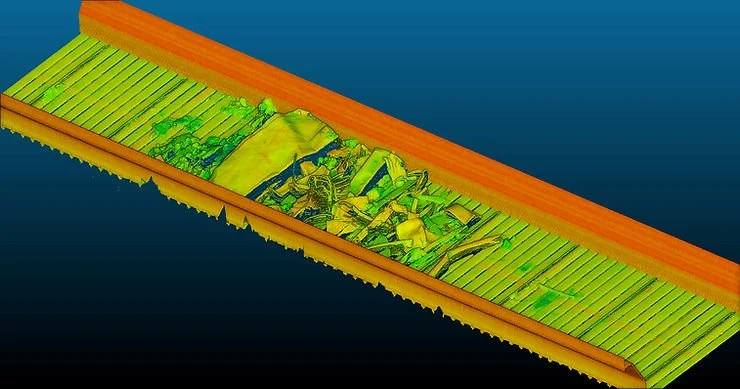
Colorized point cloud visualization of scrap material on a conveyor captured by SiLC Trace.
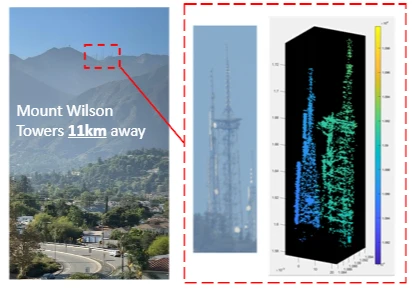
Ultra long-range scan of Mount Wilson towers at approximately 11 km captured by SiLC Vista.
FMCW LiDAR Applications
SiLC FMCW LiDAR sensors are commonly deployed for:
- Manufacturing & Quality Inspection – Non-contact dimensional inspection, surface measurement, and automated part verification.
- Warehouse & Logistics Automation – Package dimensioning, conveyor profiling, and measurement of moving objects.
- Robotics & Machine Vision – High-resolution spatial measurements for robotic inspection and automation.
- Automotive & Large Assembly Inspection – 3D measurement of components, assemblies, and surfaces.
- Bulk Material Handling – Conveyor profile monitoring and volume-measurement workflows.
- Perimeter Security & Long-Range Monitoring – Long-range sensing with the Eyeonic Vista product family.
Why Buy SiLC Through US LiDAR?
US LiDAR helps customers move beyond sensor selection to practical integration. Our US-based team can assist with application consulting, technical evaluation, hardware selection, and deployment planning.
How We Can Help
- Application engineering and product selection
- Working-distance and field-of-view evaluation
- Sensor mounting and mechanical integration
- Industrial computer, power, and network recommendations
- Point-cloud and automation software integration
- Testing, commissioning, and technical support
Frequently Asked Questions
What is FMCW LiDAR?
Frequency Modulated Continuous Wave LiDAR measures distance by comparing emitted and reflected frequency-swept light and can directly measure radial velocity.
What is the difference between Trace and Edge?
Trace is a line scanner for profiling and dimensioning; Edge is an area scanner for 3D surface and object measurement.
What is the difference between standard and Ultra models?
Standard models offer up to 10 m working range; Ultra models offer up to 5 m with finer specified depth precision.
What is Eyeonic Vista?
Vista is SiLC’s long-range FMCW LiDAR product family for applications such as long-distance monitoring and security. Contact us for the current datasheet and exact capabilities.
Can FMCW LiDAR operate in bright sunlight?
Yes, FMCW LiDAR is inherently resistant to sunlight, without compromise, while all other 3D technologies are affected by ambient lighting. For example, sunlight adds noise and false returns to Time-of-Flight LiDARs, and range drops on bright days. Eyeonic Trace and Edge detect only light coherent with their own laser, so sunlight is effectively invisible to the measurement. Both sensors are specified and tested to 100 klux, the brightness of direct midday sun, and performance is unchanged.
Can US LiDAR help with integration?
Yes. US LiDAR assists with sensor selection, hardware recommendations, integration planning, and deployment support.
Your Partner for FMCW LiDAR Solutions
FMCW LiDAR creates new opportunities for precision measurement, industrial automation, and advanced perception. US LiDAR combines SiLC’s Eyeonic technology with practical application consulting and integration support to help you build a solution that meets your technical requirements.
Whether you are evaluating Trace for conveyor profiling, Edge for 3D inspection, or Vista for long-range sensing, our team can help you identify the right approach.