INTELLIGENT WAREHOUSE MONITORING SOLUTIONS
Intelligent Warehouse Monitoring Systems
Real-Time Visibility Into Every Corner of Your Warehouse
Track forklifts, monitor dock doors, improve worker safety, and optimize warehouse operations with intelligent LiDAR-based monitoring.
US LiDAR delivers comprehensive warehouse monitoring systems that combine advanced LiDAR sensors, intelligent software, and optional camera integration. From forklift and pedestrian tracking to dock door monitoring, traffic analytics, and automated alerts, our solutions provide the visibility needed to operate safer, more efficient facilities.
US-Based Sales & Support | Hardware + Software | Fully Integrated Solutions
WAREHOUSE MONITORING
Smarter Warehouse Operations Start With Better Visibility
Modern warehouses are dynamic environments where forklifts, autonomous mobile robots, equipment, and employees operate in close proximity. Managing these interactions requires more than cameras and traditional warehouse management software. Facility operators need real-time information about where objects are located, how traffic is moving, and when potentially unsafe conditions develop.
US LiDAR’s warehouse monitoring system uses advanced LiDAR perception technology to detect, classify, and track activity throughout monitored areas of your facility. Our software converts spatial data into actionable information, including vehicle counts, pedestrian movement, dock activity, occupancy, and configurable alerts.
Whether deployed as a standalone warehouse monitoring solution or integrated with existing warehouse management and automation systems, our technology helps improve situational awareness, operational visibility, and workplace safety.
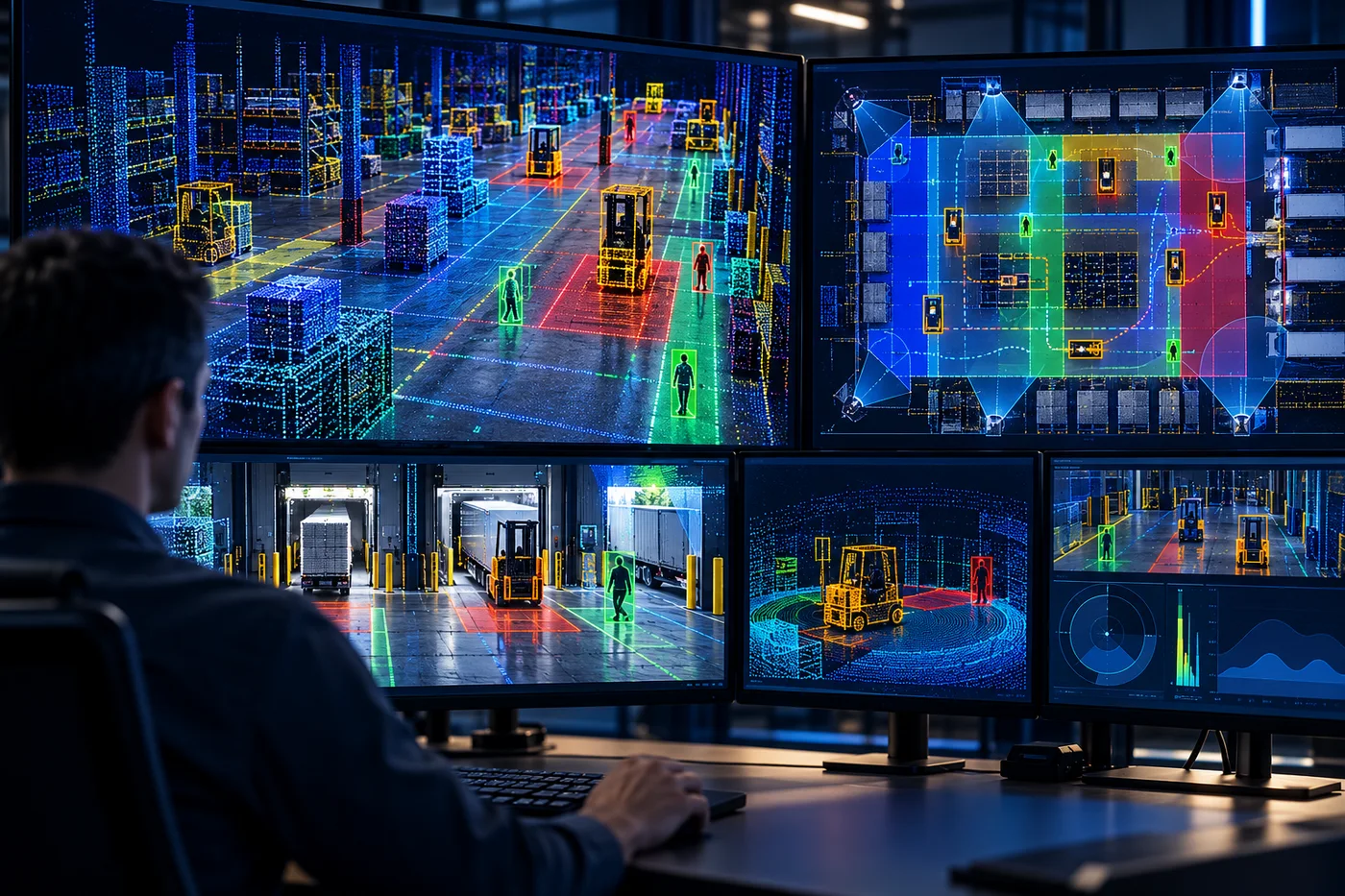
SYSTEM CAPABILITIES
Warehouse Monitoring Capabilities
From dock doors and forklift traffic to pedestrian safety and restricted areas, one LiDAR-based system covers the activity across your warehouse.
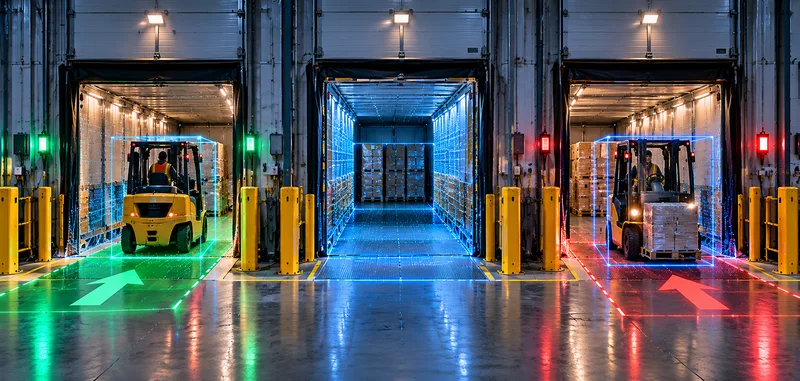
Dock Door Monitoring
Track forklifts and people entering or exiting trailers, monitor dock activity, and support status notifications.
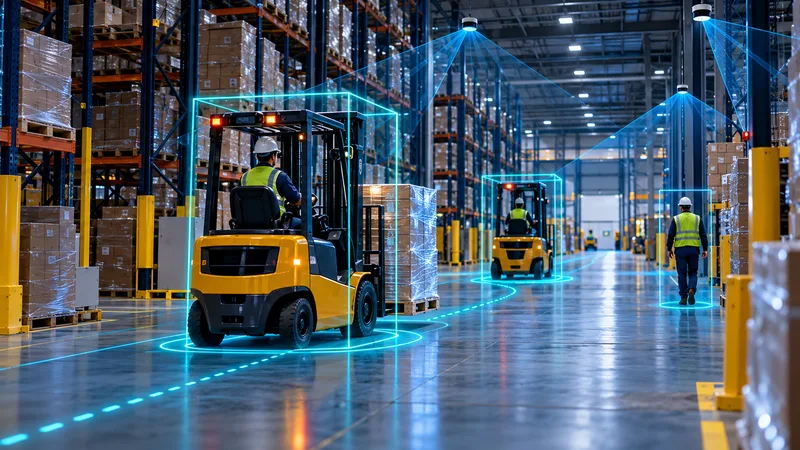
Forklift & Equipment Tracking
Detect and track forklifts, AMRs, AGVs, and other mobile equipment throughout monitored areas.
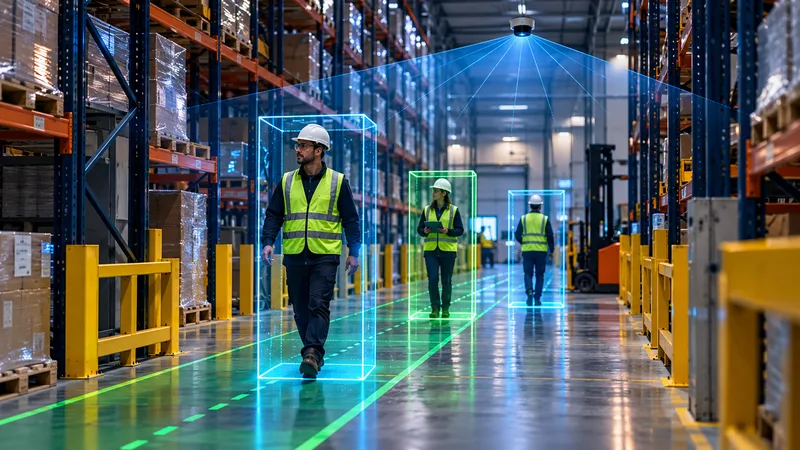
People Tracking
Monitor pedestrian movement, occupancy, and activity in designated warehouse zones.
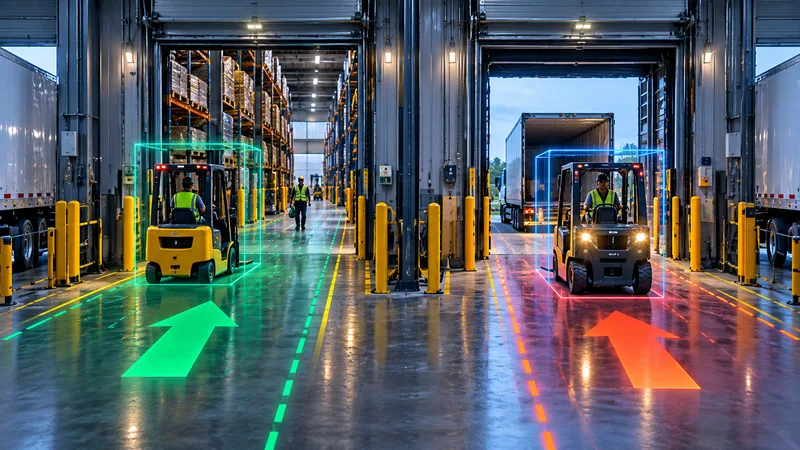
Ingress & Egress Monitoring
Count vehicles and people entering or exiting specific areas, including direction of travel.
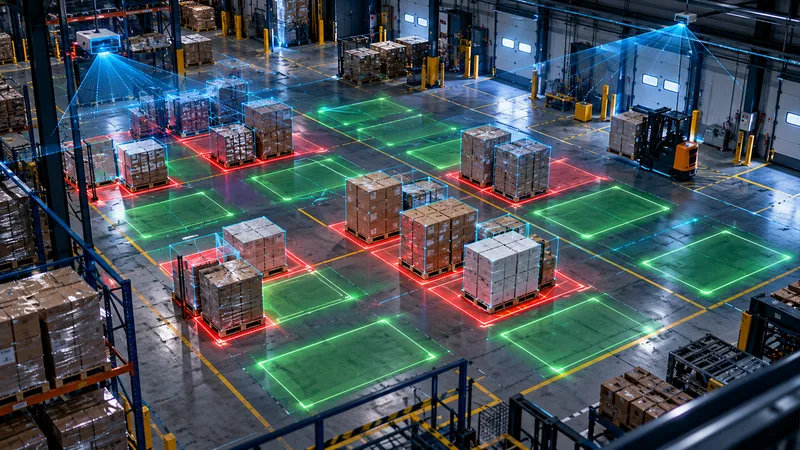
Occupancy & Availability
Monitor dock bays, staging areas, loading zones, and other spaces for occupancy.
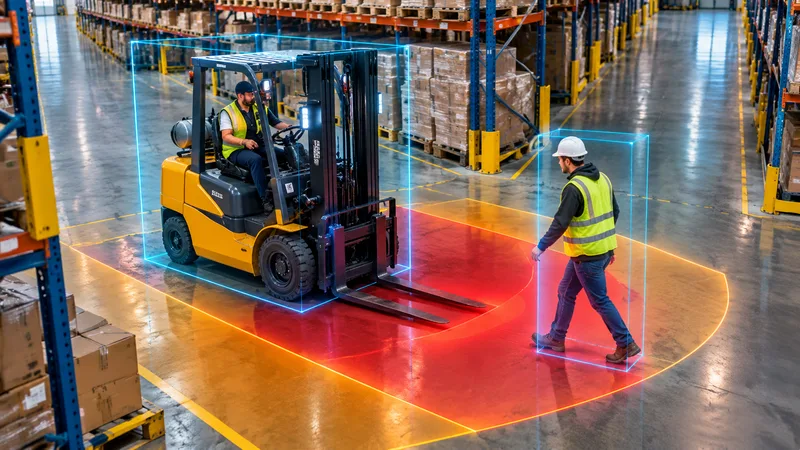
Collision & Near-Miss Detection
Identify potentially dangerous interactions between forklifts, pedestrians, and other equipment.
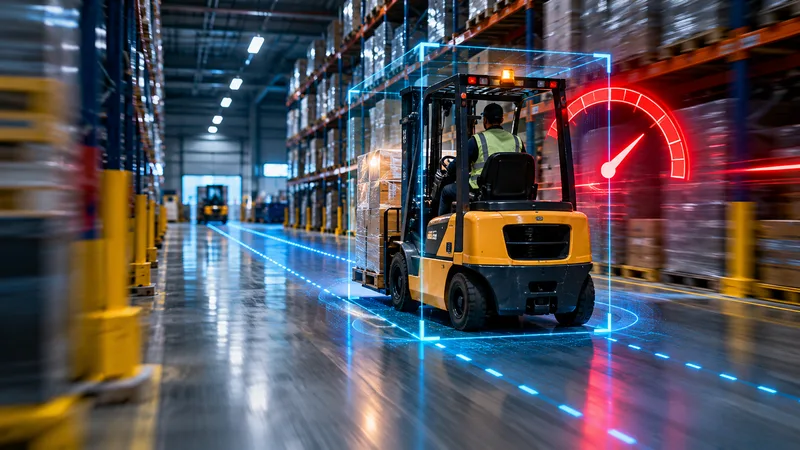
Over-Speed Detection
Monitor forklift and vehicle speeds and generate alerts when defined thresholds are exceeded.
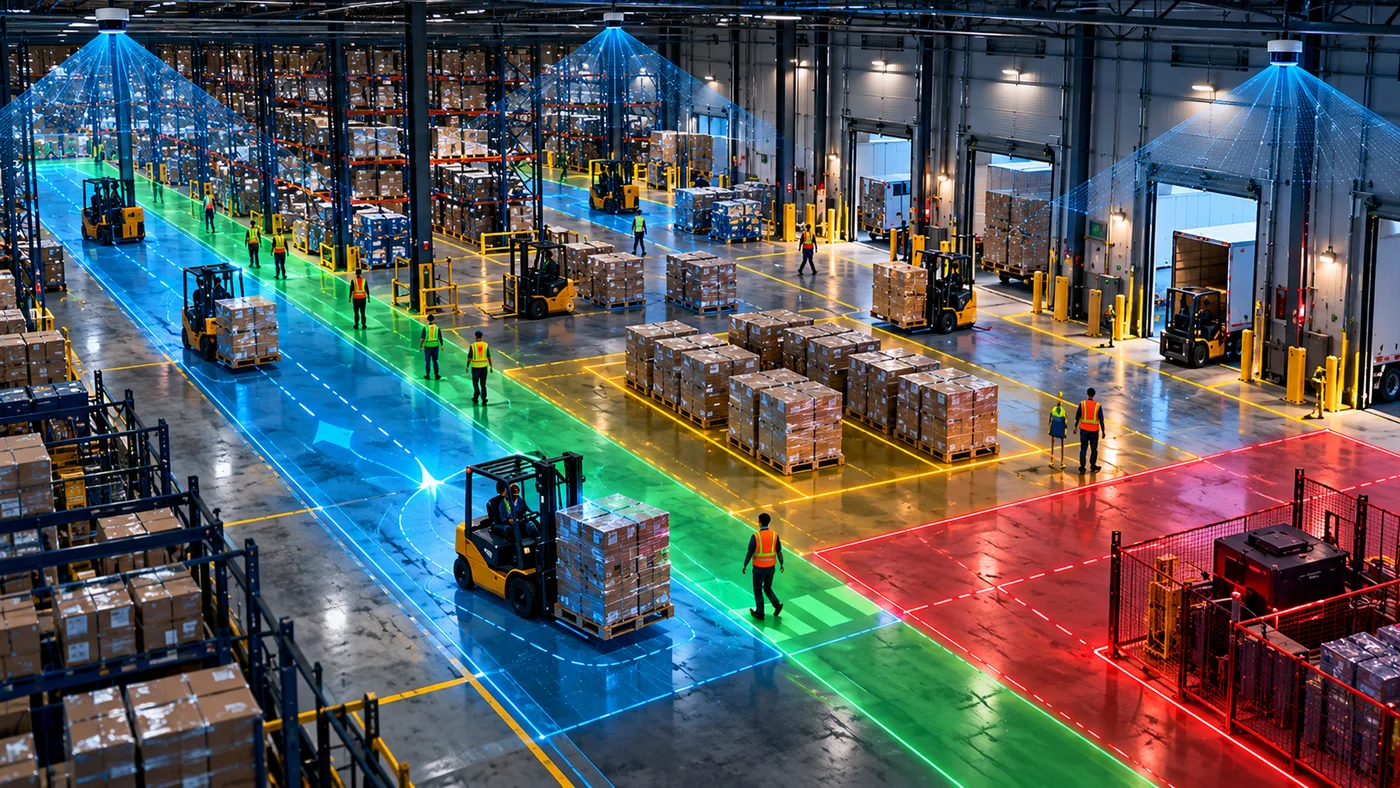
Zone-Based Monitoring
Create virtual monitoring zones around aisles, intersections, dock doors, and restricted areas.
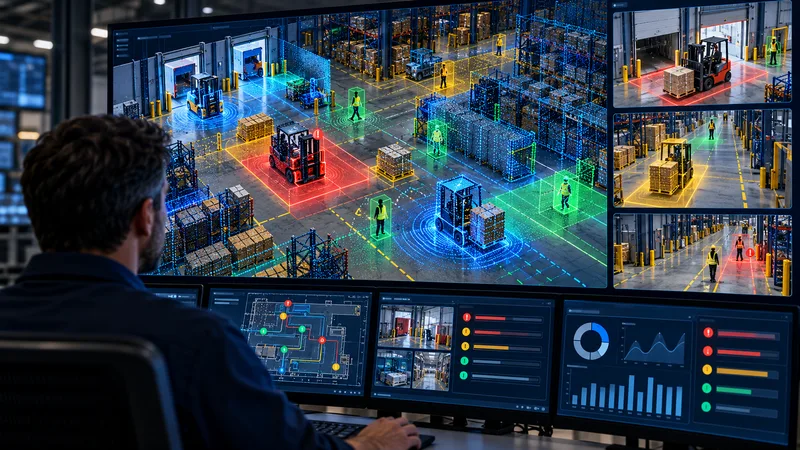
Intelligent Alert Management
Generate notifications for unsafe interactions, occupancy conditions, traffic events, and zone violations.
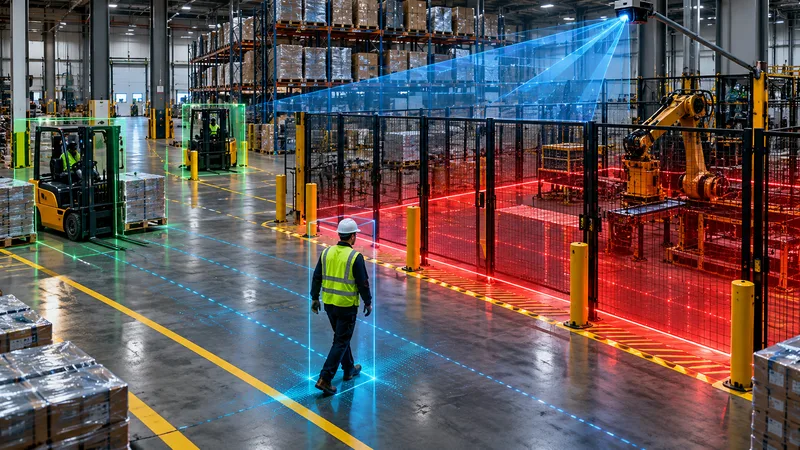
Restricted Area Monitoring
Detect unauthorized movement into equipment areas, hazardous zones, and other restricted spaces.
FEATURED APPLICATION: DOCK DOOR MONITORING
Intelligent Dock Door Monitoring for Safer, More Efficient Operations
Loading docks are among the busiest areas of a warehouse, with forklifts, pedestrians, and trailers frequently interacting in confined spaces. Understanding whether a trailer is occupied, how equipment moves through each dock door, and when hazardous conditions develop can help facility operators improve safety and efficiency.
US LiDAR’s dock door monitoring solution uses LiDAR sensors to detect and track activity around dock openings and within visible portions of connected trailers. Our software can count forklift movements, monitor direction of travel, identify occupancy conditions, and generate notifications based on configured events.
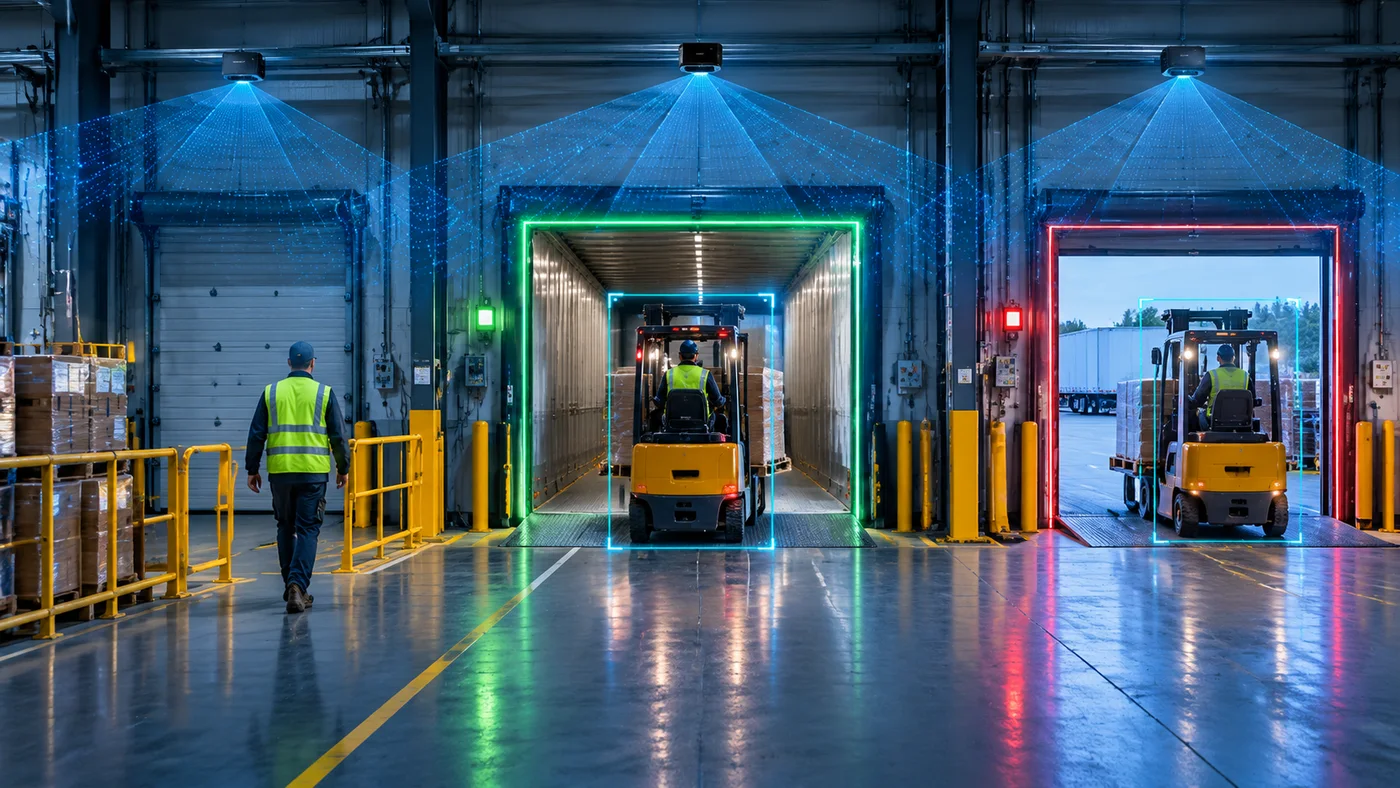
Dock Door Ingress and Egress Tracking
Monitor every movement through a designated dock door.
- Detect forklifts, people, and other supported object classes crossing a virtual threshold.
- Track whether each object is entering or exiting a trailer.
- Maintain directional movement counts for individual dock doors.
- Record movement events for operational analysis.
- Identify activity at docks that should be unoccupied or inactive.
Vehicle Counting by Area and Direction
Measure warehouse traffic at each dock and within designated operational zones. For example, a facility could monitor entering forklift counts, exiting forklift counts, net movement counts, and the number of objects currently detected.
These measurements can help operators evaluate loading activity, identify traffic bottlenecks, and understand the utilization of individual dock doors.
Trailer Occupancy and Empty-Container Detection
Determine whether forklifts or personnel are present within monitored portions of a trailer or container. LiDAR can detect objects and track their movement through the dock opening. Where the sensor configuration provides adequate visibility, the system can identify whether a monitored area is occupied or no objects are currently detected.
This information can support notifications when activity is detected inside a trailer or when the monitored space appears clear. For safety-critical use cases, occupancy status should be evaluated alongside sensor coverage, occlusion, communication status, and other dock equipment signals.
Red/Green Signage and Notification Integration
The monitoring system can be configured to provide occupancy information to compatible warning lights, signs, and notification systems.
- RED – Activity Detected: Forklift or pedestrian detected in the monitored trailer area. Warning signal indicates active occupancy.
- GREEN – No Activity Detected: No objects currently detected in the monitored area, subject to coverage and system-health checks.
- Additional alerts: Unexpected entry, prolonged occupancy, or activity during restricted operating periods.
Safety note: Red/green occupancy signals do not themselves authorize trailer departure, trailer entry, or movement of dock equipment. Traffic control and interlocks require appropriate additional safeguards and validation.
FEATURED APPLICATION: ZONE-BASED MONITORING
Create Intelligent Monitoring Zones Throughout Your Warehouse
Every warehouse has areas with different traffic patterns, operational requirements, and safety risks. US LiDAR’s warehouse monitoring software enables operators to define virtual zones and configure monitoring rules based on the activity that occurs within them.
Instead of relying on a single set of rules for the entire facility, users can tailor detection and alert conditions to each monitored area.
Forklift Traffic Zones
Monitor forklift activity along designated travel paths, track direction of travel, count vehicles, and detect speeds above configured limits.
Pedestrian Safety Zones
Detect people entering forklift operating areas, busy intersections, and other locations where pedestrian and vehicle interactions present potential hazards.
Loading & Staging Zones
Monitor occupancy and activity around staging areas, loading bays, receiving zones, and material handling locations.
Restricted Access Zones
Generate alerts when people or vehicles enter restricted areas during designated operating conditions.
Directional Counting Zones
Count forklifts, AGVs, and personnel crossing defined boundaries in each direction to understand traffic flow and facility utilization.
Configurable Alert Conditions
Examples include a person entering a forklift-only zone, a vehicle exceeding a configured speed threshold, an occupied dock door during an inactive period, or a restricted area becoming occupied. Alerts can notify personnel, support operational dashboards, or provide event information to compatible external systems.
APPLICATIONS
Additional Warehouse Monitoring Applications
Forklift, AMR & AGV Tracking
Monitor the location and movement of forklifts, autonomous mobile robots, and automated guided vehicles throughout your warehouse. Our LiDAR-based software can track supported objects within monitored areas, providing information about vehicle movements, traffic patterns, and interactions with other equipment and personnel. Multiple LiDAR sensors can expand coverage across larger facilities.
Pedestrian Tracking & Warehouse Safety
Gain visibility into pedestrian movement through warehouse aisles, loading zones, intersections, and shared workspaces. The system can detect personnel entering designated monitoring zones and identify potentially hazardous interactions between pedestrians and mobile equipment.
Collision & Near-Miss Detection
Analyze object position, direction, movement, and proximity to identify interactions that meet configured near-miss conditions. Examples include forklifts approaching pedestrians, vehicles converging at intersections, and equipment operating too close to designated exclusion zones. Recorded events can help safety managers identify recurring hazards.
Traffic Flow, Ingress & Egress
Understand how vehicles and people move between different operational areas. Count objects passing through monitored entrances, aisles, dock doors, and other virtual boundaries. Directional counts and activity trends can help warehouse managers identify congestion and evaluate traffic flow.
Over-Speed Detection
Monitor forklift and vehicle movement speeds using LiDAR tracking data. Define speed thresholds for different operational zones and generate alerts when monitored vehicles exceed those limits.
Occupancy & Availability Monitoring
Monitor whether designated spaces are occupied by vehicles, people, or other detectable objects. Applications include dock door occupancy, staging-area utilization, forklift parking areas, and restricted zones.
HOW THE TECHNOLOGY WORKS
LiDAR-First Perception. Camera-Enhanced Intelligence.
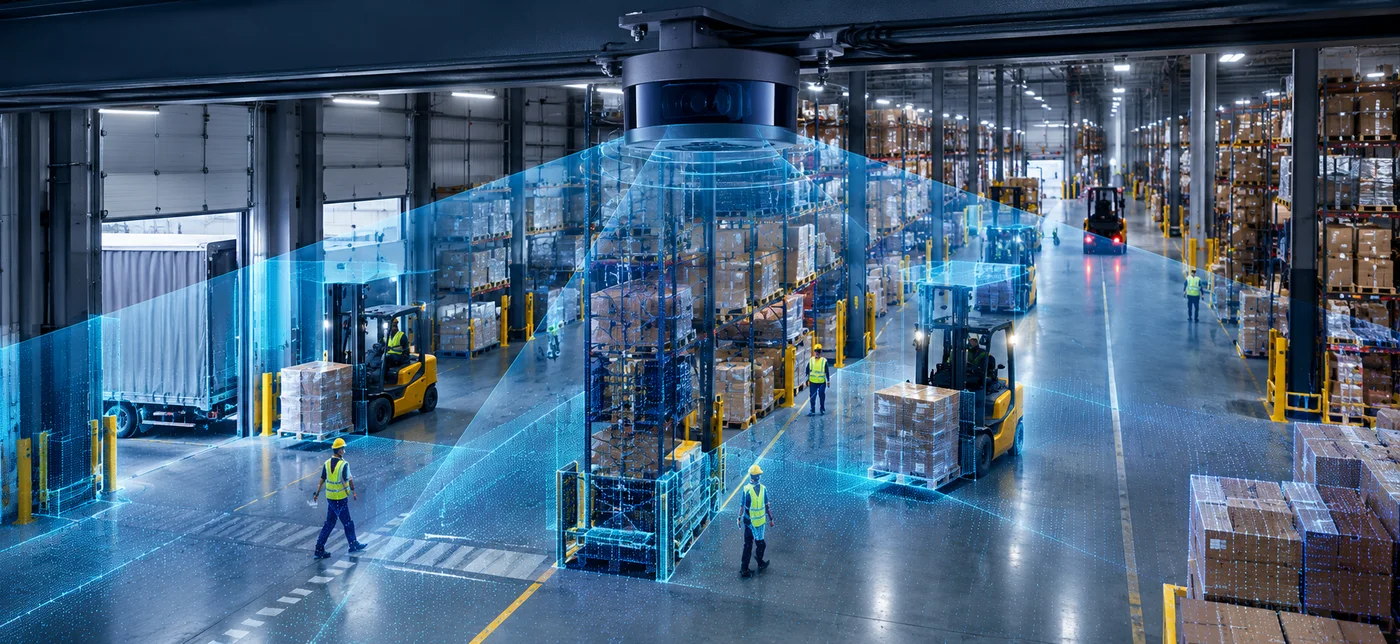
US LiDAR’s warehouse monitoring system uses LiDAR as the primary perception sensor to create a three-dimensional understanding of activity within monitored areas. Sensors positioned throughout the facility measure object locations and movements. Our software processes this information to detect and track forklifts, pedestrians, and other supported objects.
Multiple LiDAR sensors can provide overlapping coverage across warehouses, dock areas, intersections, and other locations. Cameras can be integrated when additional visual information is needed.
1. LiDAR Sensors
Collect 3D spatial data from multiple locations throughout the warehouse.
2. Object Detection & Tracking
Detect supported objects, estimate positions and speeds, and track movement.
3. Intelligent Monitoring Software
Analyze crossings, occupancy, traffic flow, proximity, and zone events.
4. Real-Time Visibility & Alerts
Provide event information, counts, notifications, and data for external systems.
Why Use LiDAR for Warehouse Monitoring?
- Three-dimensional perception: Understand object positions, dimensions, and movements rather than relying solely on 2D images.
- Lighting independence: Active LiDAR does not depend on ordinary visible-light illumination.
- Multi-object tracking: Monitor vehicles and pedestrians within configured sensor coverage.
- Flexible deployment: Select sensor technologies based on coverage, performance, and budget.
- Optional camera context: Supplement LiDAR with visual identification, colors, license plates, and event imagery.
COMPLETE SOLUTIONS
One Partner for Your Entire Warehouse Monitoring Solution
An effective warehouse monitoring system requires more than selecting the right LiDAR sensor. Reliable detection, sensor positioning, software configuration, and system integration are all important elements of a successful deployment.
LiDAR Hardware
We support a broad range of LiDAR manufacturers, including Hesai, Seyond, RoboSense, Ouster, MicroVision, and others. Our sensor-agnostic approach lets us recommend solutions based on application requirements.
Warehouse Monitoring Software
Our software processes LiDAR data to deliver object tracking, vehicle counts, directional movement information, occupancy measurements, event detection, and configurable alerts.
System Integration
Integrate with compatible cameras, visual notification systems, existing warehouse software, and other operational technologies. Custom integration requirements can be evaluated for each deployment.
Installation & Technical Support
From sensor selection and system design to software configuration and optional installation, our US-based team can help support implementation.
INDUSTRIES
Warehouse Monitoring Applications by Industry
Distribution Centers & Logistics Facilities
Dock monitoring, forklift traffic, pedestrian safety, and loading area utilization.
Manufacturing & Industrial Facilities
Equipment tracking, restricted-zone monitoring, and vehicle-pedestrian interaction detection.
Fulfillment & E-Commerce Warehouses
Traffic flow monitoring, occupancy analysis, equipment movement, and congestion detection.
Automated Warehouses & Robotics Facilities
AMR/AGV tracking, mixed-traffic monitoring, occupancy detection, and zone alerts.
Frequently Asked Questions
What is a warehouse monitoring system?
A warehouse monitoring system uses sensors and software to observe activity throughout a facility. It can track people, forklifts, and other mobile equipment while providing information about traffic flow, occupancy, dock activity, and potentially hazardous conditions.
How does LiDAR warehouse monitoring work?
LiDAR sensors measure distances and generate three-dimensional spatial data. Monitoring software processes the information to detect and track objects, measure movement, count vehicles or people, and identify events within configured monitoring zones.
Can LiDAR monitor forklifts entering and exiting trailers?
Yes. Properly positioned LiDAR sensors can detect forklifts crossing a dock door threshold and determine their direction of travel. The software can maintain separate entering and exiting counts for each monitored door.
Can the system detect whether someone is inside a trailer?
Yes, when sensor placement and visibility allow detection within the monitored trailer area. Occlusions and changing trailer configurations can affect performance; no-detection status should not be treated as unconditional proof the trailer is empty.
Can the warehouse monitoring system control red and green warning lights?
The system can provide occupancy and event information to compatible visual notification equipment through integration. Safety-critical control requires additional design, validation, and potentially dedicated safety-rated equipment.
Can the system detect near misses between forklifts and pedestrians?
Yes. Software can analyze tracked movement and proximity to identify interactions meeting defined near-miss conditions. It supports monitoring and analysis, not a substitute for protective systems or safe operating procedures.
Can we create custom monitoring zones?
Yes. Virtual zones can be defined around dock doors, aisles, intersections, restricted areas, and other locations, each with application-specific monitoring rules.
Does the system require cameras?
No. LiDAR is the primary perception sensor. Cameras are optional for visual identification, equipment appearance, or image-based event context.
Which LiDAR manufacturers are compatible?
US LiDAR supports a broad range of technologies from Hesai, Seyond, RoboSense, Ouster, MicroVision, and others. Model-specific compatibility is determined during system design.
Can US LiDAR provide installation?
Yes. US LiDAR provides hardware, software, integration support, and optional installation services.
Get Complete Visibility Into Your Warehouse Operations
From monitoring forklift traffic and dock door activity to improving pedestrian safety and managing warehouse zones, US LiDAR delivers intelligent monitoring solutions tailored to your facility. Our team can help select the right sensors, configure monitoring software, integrate with existing systems, and support deployment.