LiDAR for Construction
Equipment & Applications
LiDAR is rapidly transforming the construction industry by enabling safer, more efficient, and more autonomous job sites. From heavy equipment automation to site mapping and worker safety monitoring, LiDAR delivers precise, real-time 3D perception that performs reliably even in dust, vibration, glare, and challenging outdoor conditions. Whether installed on excavators, bulldozers, telehandlers, track loaders, cranes, or autonomous vehicles, LiDAR provides the sensing foundation required for next-generation construction technology.
Popular LiDAR Products For Construction
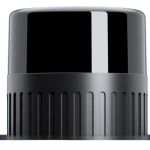


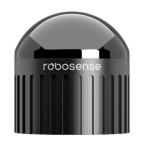
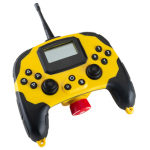
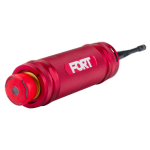
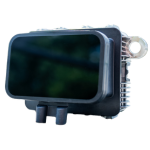
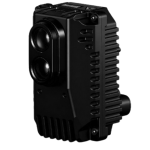

Equipment Applications
LiDAR enhances safety, navigation, and automation on nearly every major category of construction equipment, including:
- Excavators & Dozers – Real-time surface scanning, depth awareness, obstacle detection, and autonomous digging assistance.
- Loaders, Skid Steers & Telehandlers – Collision avoidance, blind-spot coverage, and precision maneuvering in congested areas.
- Dump Trucks & Haulers – Autonomous haulage, edge detection, berm monitoring, and safe path planning.
- Cranes & Lifting Equipment – Swing radius monitoring, overhead obstacle detection, and worker safety zones.
- Concrete & Paving Equipment – Grade control, volumetric measurement, and jobsite terrain mapping.
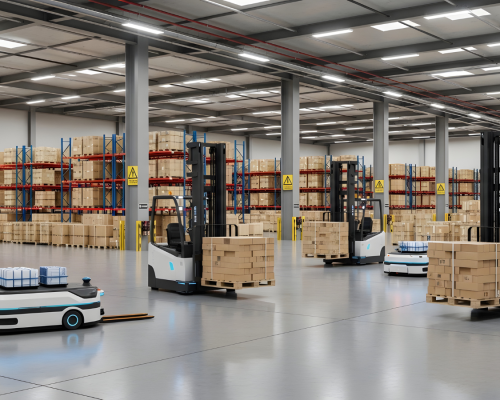
- Robotic & Semi-Autonomous Equipment – AMRs and site-inspection robots for surveying, security, and material transport.
LiDAR delivers consistent depth, geometry, and situational awareness, enabling equipment to operate with higher confidence and fewer incidents.
Common Applications of
LiDAR for Construction
Autonomous Navigation & Path Planning
On large, dynamic job sites, LiDAR gives machines the ability to perceive terrain, workers, vehicles, and obstacles with high accuracy. Autonomous and semi-autonomous equipment use LiDAR to plan safe routes, detect changes in the environment, and avoid costly collisions.
Collision Avoidance & Safety
Construction environments are filled with blind spots, moving personnel, heavy machinery, and unpredictable hazards. LiDAR enables:
- 360° situational awareness
- Real-time obstacle detection
- Worker tracking and zone monitoring
- Slow-down and stop commands for safety systems
These capabilities significantly reduce the likelihood of equipment-related injuries and property damage.
Mapping & Terrain Modeling
LiDAR provides detailed 3D elevation models, enabling:
- Jobsite digitization
- Pre- and post-excavation comparison
- Cut-and-fill analysis
- Material stockpile measurement
- As-built verification
LiDAR’s speed and accuracy outperform traditional survey methods, reducing field time and increasing project visibility.
Volumetric Measurement
LiDAR can precisely calculate material volumes such as:
- Soil
- Aggregate
- Asphalt
- Mull
- Debris piles
These volumetric measurements support billing accuracy, project planning, and inventory management.
Equipment Automation
Manufacturers and integrators increasingly rely on LiDAR to automate or assist:
- Grading operations
- Excavation depth control
- Trenching
- Material placement
- Remote or teleoperated equipment
LiDAR’s ability to generate dense point clouds in real time gives machines the confidence needed to operate autonomously in cluttered outdoor environments.
Choosing the Right LiDAR for
Construction Equipment
Mechanical LiDAR
- Provides 360° coverage
- Ideal for large equipment that requires full-surround awareness
- Suitable for mapping, navigation, and obstacle detection
Solid-State LiDAR
- Extremely rugged and vibration-resistant
- Compact and ideal for side-mounted and front-mounted applications
- Cost-effective for near-field detection and safety zones
Directional LiDAR
- Ideal for defined safety zones or targeted perception (e.g., front-facing detection)
- Useful for obstacle detection, trenching assistance, and edge monitoring
Most construction applications benefit from a hybrid approach—360° mechanical LiDAR for navigation and mapping, paired with solid-state sensors for short-range collision avoidance and precision tasks.
Advantages of LiDAR Over Cameras for Construction
Construction environments are harsh on vision systems. Dust, direct sunlight, night operations, reflections, and airborne debris can degrade camera performance. LiDAR overcomes these challenges with:
- True 3D distance measurement rather than image-based estimation
- Reliable performance in any lighting, including total darkness
- Dust and glare resistance, when properly specified
- Longer detection ranges for faster, safer operation of large machinery
- Wide fields of view for comprehensive jobsite awareness
- Higher accuracy in depth and geometry, supporting automation and precision tasks
Because LiDAR does not rely on ambient light and is engineered for vibration and environmental exposure, it significantly outperforms cameras for navigation, safety, and perception on construction equipment.
Why LiDAR Matters for the
Future of Construction
Construction is rapidly adopting automation, autonomy, and digital workflows. As machines take on more complex tasks, perception becomes the backbone of safety and performance. LiDAR enables equipment to understand its surroundings with unmatched accuracy, allowing operators and autonomous systems to work smarter, faster, and safer.
With LiDAR integrated into construction workflows, job sites become more predictable, more productive, and significantly less hazardous.