LiDAR for Manufacturing and Industrial Applications
Manufacturing and industrial facilities rely on precision, safety, and automation to maintain uptime and efficiency. LiDAR provides the high-accuracy, real-time 3D sensing needed to monitor environments, guide autonomous systems, detect hazards, and automate workflows across warehouses, factories, processing plants, and logistics operations. With the ability to perform reliably in variable lighting, heavy dust, reflective surfaces, and high-activity environments, LiDAR is becoming an essential perception technology for next-generation industrial automation and safety systems.
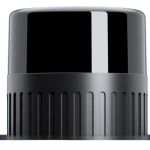
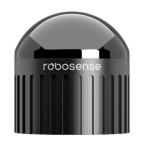
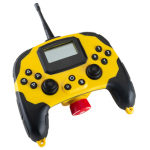
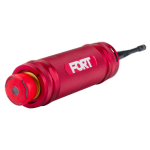
Popular LiDAR Products for Industrial Applications


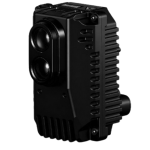
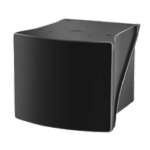
Industrial Equipment & Systems That Use LiDAR
LiDAR is integrated across a wide range of industrial and manufacturing systems, including:
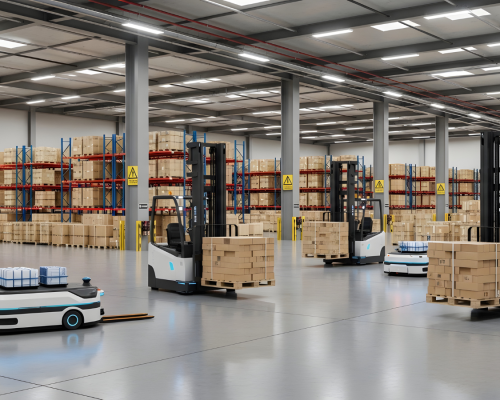
- Autonomous Mobile Robots (AMRs) & AGVs – Navigation, obstacle detection, collision avoidance, and SLAM in warehouses and production areas.
- Forklifts & Industrial Vehicles – Worker detection, blind-spot coverage, pallet alignment, and collision prevention.
- Robotic Workcells & Cobots – Dynamic safety zones, object detection, and workspace monitoring.
- Conveyor & Material Flow Systems – Dimensioning, counting, spacing, and package detection.
- Industrial Process Equipment – Level measurement, volumetric sensing, alignment, and validation tasks.
- Security & Perimeter Monitoring – Intrusion detection and movement tracking around high-risk zones.
- Automated Storage & Retrieval Systems (AS/RS) – Rack detection, aisle navigation, and obstacle avoidance.
Whether installed on mobile robots, fixed structures, or production equipment, LiDAR enhances situational awareness and improves operational efficiency throughout the facility.
Common Applications of
LiDAR in Manufacturing
Autonomous Navigation for AMRs & AGVs
LiDAR enables high-precision navigation in dynamic industrial environments where workers, equipment, pallets, and obstacles are constantly moving. Real-time perception allows robots to move safely, avoid collisions, and adjust paths instantly.
Collision Avoidance & Worker Safety
Factories are filled with blind spots, moving forklifts, and personnel. LiDAR provides:
- 360° obstacle detection
- Zone-based slow/stop triggers
- Worker tracking near equipment
- Hazard detection in narrow aisles or congested areas
These capabilities reduce incidents and protect employees on the floor.
Dimensioning, Counting & Quality Control
LiDAR’s high-accuracy distance measurement supports:
- Box and pallet dimensioning
- Inventory and stack height measurement
- Conveyor spacing calculations
- Object verification and presence detection
This improves automation precision and reduces manual inspection.
Facility & Asset Mapping
LiDAR enables rapid mapping of warehouses and production lines for:
- Layout planning
- Obstacle and equipment positioning
- Autonomous robot localization
- Digital twin generation
High-resolution point clouds make layout changes easier and more reliable.
Process Monitoring & Control
In industrial process environments, LiDAR supports:
- Level measurement of bulk materials
- Fill detection for bins and hoppers
- Alignment verification of moving components
- Surface monitoring for manufacturing variation
Its ability to operate in dust, heat, and vibration makes it suitable for challenging industrial conditions.
LiDAR Sensor Types for
Industrial Applications
Mechanical LiDAR
- 360° perception
- Ideal for AMRs, AGVs, and indoor mapping
- High resolution and longer range
Solid-State LiDAR
- Extremely durable, compact, and vibration-resistant
- Ideal for collision avoidance, worker safety zones, and harsh industrial environments
- Lower maintenance with no moving parts
Directional LiDAR
- Focused field of view
- Ideal for monitoring specific danger zones, conveyor areas, or narrow aisles
Many industrial deployments combine these sensor types to achieve the right balance of long-range navigation and close-range safety.
Advantages of LiDAR Over Cameras
in Industrial Environments
Cameras struggle in fast-paced industrial environments due to inconsistent lighting, glare, shadows, and occlusion. LiDAR overcomes these limitations with:
High Environmental Reliability
- Performs consistently in high-reflection environments
- Unaffected by low light, shadows, or glare
- Resistant to dust and airborne particles when properly specified
True 3D Spatial Awareness
LiDAR provides precise distance and geometry data—not estimates—which improves automation accuracy.
Wide Field of View & Long-Range Detection
Industrial LiDAR can detect obstacles across large factory floors and loading bays, offering coverage that would require multiple cameras.
Lower False Positives
Unlike cameras, LiDAR interprets objects based on 3D shape and distance, reducing unnecessary stops that can disrupt operations.
Cost-Competitive Performance
Modern LiDAR pricing is now comparable to multi-camera systems while providing superior depth, detection performance, and reliability.
Why LiDAR Matters for
Modern Industrial Automation
Manufacturers are transitioning toward autonomous systems, robotics, and real-time monitoring to address labor shortages, safety requirements, and efficiency demands. LiDAR provides the high-accuracy, robust perception needed to automate processes, reduce downtime, protect workers, and increase throughput.
By enabling reliable 3D sensing in challenging conditions, LiDAR is becoming the backbone of next-generation industrial automation.