LiDAR in Agriculture
As farming operations become more automated and data-driven, LiDAR in agriculture is rapidly becoming a foundational sensing technology for modern equipment. By providing accurate 3D perception in real time, agriculture LiDAR enables tractors, harvesters, sprayers, chippers, and autonomous robots to navigate fields safely, detect obstacles, monitor crop conditions, and execute tasks with greater precision. Whether deployed on an autonomous tractor, a high-end combine, or a field robot, LiDAR gives agricultural equipment the intelligence needed to operate efficiently in dynamic outdoor environments.
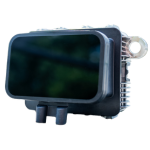
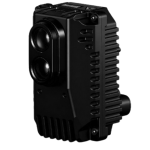
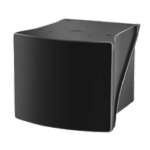
Popular LiDAR Products for Agriculture
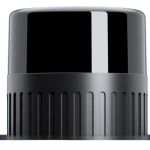


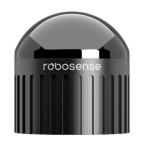
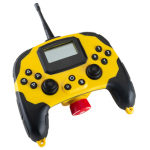
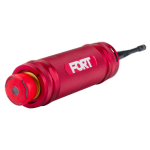
Equipment Applications for Agriculture LiDAR
LiDAR can be integrated into almost every major category of farm machinery:
- Autonomous Tractors – For self-driving field operations, obstacle detection, and path following.
- Harvesters & Combines – Enable safe navigation through tall crops, row alignment, and pipe unloading assistance.
- Sprayers & Spreaders – Maintain accurate boom positioning, detect obstructions, and map vegetation density.
- Chippers & Forestry Equipment – Enhance safety by detecting workers, branches, and debris around machinery.
- Orchard & Vineyard Robots – Support canopy mapping, tree-row navigation, and yield estimation.
- Mobile Ag Robots – Used for weeding, mowing, scouting, and autonomous material handling.
From large-scale machinery to compact field robots, LiDAR provides the 3D awareness required for precision agriculture and autonomous operation.
Common Applications of
LiDAR for Agriculture
LiDAR enables a wide range of precision farming and autonomous capabilities, including:
Autonomous Navigation for Tractors & Harvesters
LiDAR helps agricultural vehicles plan paths, avoid obstacles, and maintain straight lines or row-following accuracy even in dust, sun glare, or crop cover. For autonomous tractors, LiDAR is often paired with GNSS to achieve centimeter-level navigation and safe operation around people, animals, and equipment.
Collision Avoidance & Operator Safety
LiDAR detects obstacles in real time—rocks, machinery, livestock, fences, branches—and triggers slow-down or stop commands. This increases safety during harvesting, tilling, mowing, and forestry operations.
Crop Monitoring & Health Assessment
LiDAR can measure plant height, canopy thickness, spacing, and biomass. This supports precision agriculture by enabling variable-rate spraying, yield prediction, and health trend analysis across large fields.
Mapping & Field Digitization
Agriculture LiDAR builds highly accurate 3D maps of terrain, crop rows, orchards, vineyards, and field edges. These maps improve autonomous routing, drainage planning, orchard layout, and repeated passes for robotic equipment.
Volumetric Measurement
LiDAR can measure grain pile volume, silage mass, tree canopy density, mulch stockpiles, and material loads with high accuracy—supporting inventory management and yield analytics. s.
Advantages of LiDAR Over Cameras in Agriculture
Outdoor agriculture presents extreme lighting, dust, foliage movement, reflective surfaces, and unpredictable obstacles—conditions where traditional cameras often fail. LiDAR outperforms cameras in navigation and perception because:
- Consistent Accuracy in All Lighting
LiDAR is unaffected by sunlight, shadows, glare, or nighttime operation, ensuring consistent 3D data around the clock.
- True Distance & Geometry Measurement
Cameras infer depth, but LiDAR directly measures it. This allows an autonomous tractor or harvester to maintain safe spacing, detect small obstacles, and operate reliably in tall or dense crops.
- Larger Field of View
Industrial-grade LiDAR covers wide horizontal and vertical angles, ensuring visibility over uneven ground, slopes, and crop rows.
- Reliability in Harsh Environments
LiDAR sensors are ruggedized for dust, mud, vibrations, and temperature extremes common in agriculture—conditions that quickly degrade camera performance.
- Comparable Cost with Higher Value
As LiDAR costs continue to fall, its performance advantage over multi-camera setups makes it the most accurate and cost-effective perception sensor for autonomous agricultural machinery.
Why LiDAR Matters for the
Future of Farming
Automation is rapidly expanding across fields, orchards, and pastures. To enable safe and reliable autonomy, machines require precise, real-time understanding of their environment—something only LiDAR delivers with the necessary consistency. From autonomous tractors to orchard robots and intelligent harvesters, agriculture LiDAR is paving the way for safer operations, reduced labor requirements, optimized yields, and fully autonomous farming systems.