Mechanical LiDAR Technology
Mechanical LiDAR systems feature rotating or spinning components—typically a mirror or laser array that sweeps in 360 degrees—to collect distance data at each angle, generating highly detailed 3D point clouds. These systems are known for their exceptional performance in range and environmental coverage, making them indispensable for wide-area mapping and navigation tasks.
Mechanical LiDAR Sensors
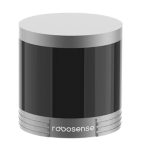
The Helios 32 provides 3 customized types to meet the multi-scenario applications of different machines and equipment:
26° Vertical FoV: offers the highest vertical angular resolution up to 0.5° of the series, and longer perception distance.
70° Ultra-wide Vertical FoV: fulfilling both perception and blind spot detection needs, simplifying on-board sensor placement.
The Helios 16 offers 30° Vertical FoV, has been fully upgraded in performance and functions compared with RS-LiDAR-16.
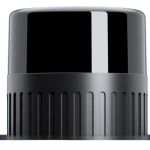
The Fairy features a compact and lightweight design. It boasts industry-leading 0.5cm ultra-high precision, up to 96-beam, and a high-density point cloud of 1.37 million points per second, while offering a wide 360°×32° FOV and a detection range of 150m. With structured point clouds optimized for algorithms, Fairy enables real-time detection of object size, shape, and distance, facilitating 3D mapping, obstacle avoidance, and autonomous navigation for robots with outstanding accuracy.
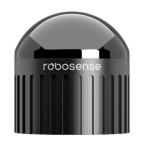
Advantages of Mechanical LiDAR
- High Resolution & Accuracy: Mechanical LiDAR systems deliver dense, high-fidelity point clouds—often outperforming other LiDAR types in precision and detail.
- Proven, Established Technology: These systems have been widely adopted since early autonomous vehicle and mapping projects, and are known for reliability in demanding use cases.
- Long Detection Range & 360° Coverage: Able to scan several kilometers, mechanical systems provide full environmental awareness—ideal for applications like ITS, mobile mapping, and drone surveying.
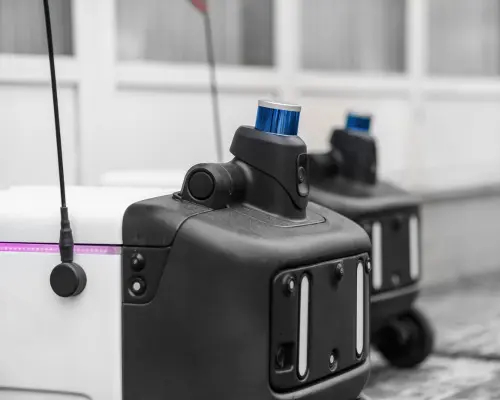
Disadvantages of Mechanical LiDAR
- High Cost & Complex Build: With spinning motors, mirrors, and precision optics, mechanical LiDAR tends to be expensive and intricate.
- Susceptible to Heat, Vibration, and Wear: Moving parts introduce points of failure, reducing durability in extreme or mobile environments.
- Bulky & Heavy: Their size and mass can limit integration into compact platforms like drones or handheld scanners.
Applications of Mechanical LiDAR
Mechanical LiDAR excels in use cases requiring accurate, wide-area scanning:
Autonomous Navigation
vehicles and AGVs navigating complex environments.
Drone & Aerial Mapping
capturing terrain and infrastructure from above.
Object Identification
precise alignment and classification of objects.
Intelligent Transportation Systems (ITS)
traffic flow monitoring and incident detection.
Mobile Mapping
urban data collection from vehicles.
Handheld Scanning
portable capture for architecture or field surveys.
Security & Monitoring
broadsite perimeter surveillance and intrusion detection.
Mechanical vs Hybrid & Solid-State LiDAR
| Feature | Mechanical LiDAR | Hybrid Solid-State LiDAR | Pure Solid-State LiDAR |
|---|---|---|---|
| Moving Parts | Yes | Yes | No |
| Field of View | Full 360° | Moderate coverage | Limited FOV |
| Reliability | Moderate | Improved | High |
| Size & Weight | Bulky & heavy | More compact | Small & lightweight |
| Cost | Expensive | Mid-range | Lower with production scale |
Hybrid Solid-State LiDAR combines fixed lasers with limited movement (e.g., MEMS or mirror scanning). It offers better reliability and compactness than mechanical systems, but doesn’t match full 360° coverage—making it well-suited for focused applications like forward-facing automotive sensors or mid-range navigation.
Pure Solid-State LiDAR has no moving parts (e.g., OPA, Flash); it’s highly compact, low-cost at scale, and reliable—but currently limited in range and typically suited for applications needing smaller FOV or closer detection.
Where Mechanical LiDAR Fits In The Market
Though newer solid-state technologies are emerging rapidly, mechanical LiDAR retains a crucial role where comprehensive, long-range environmental data is essential—such as in autonomous navigation, large-scale mapping, and complex site planning.